

Uses of Arduino: Applications, Benefits, and Real-Life Examples
Introduction
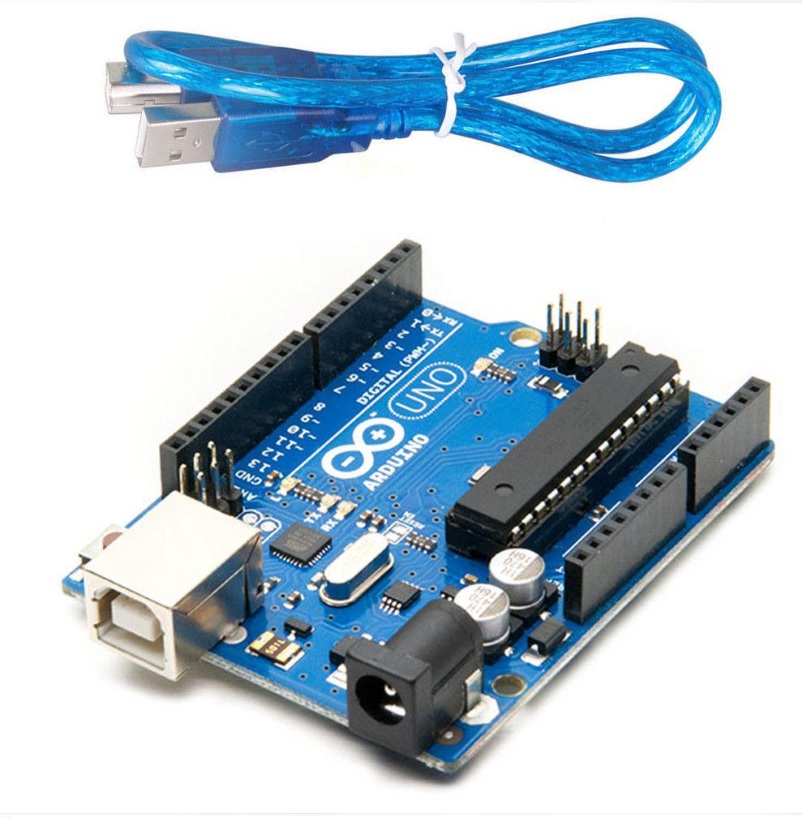
Arduino is an open-source electronics platform used to build interactive electronic projects. It consists of programmable boards that can receive information from sensors, process instructions, and control devices such as lights, motors, displays, and alarms. Arduino is popular among students, hobbyists, engineers, and inventors because it is affordable, flexible, and relatively easy to learn.
Arduino is widely used in education, robotics, home automation, agriculture, environmental monitoring, and many other fields.
1. Robotics
One of the most popular uses of Arduino is robotics. Arduino boards can control motors, read sensor data, and help robots perform different tasks.
Examples include:
- Obstacle-avoiding robots
- Line-following robots
- Robotic arms
- Remote-controlled cars
- Small automated machines
Arduino is an excellent starting point for learning robotics because beginners can combine simple programming with practical electronics.
2. Home Automation
Arduino can be used to automate household devices and make homes more convenient. By connecting sensors, relays, and communication modules, users can create systems that respond automatically to different conditions.
Examples include:
- Automatic lighting systems
- Motion-activated lights
- Temperature-controlled fans
- Automatic door systems
- Water tank level alarms
For example, a motion sensor connected to an Arduino can detect movement and turn on a light automatically. However, household mains electricity requires properly rated components and safe installation.
3. Agriculture and Smart Farming
Arduino is useful in agriculture because it can monitor environmental conditions and automate certain farming tasks.
Examples include:
- Automatic irrigation systems
- Soil moisture monitoring
- Temperature and humidity measurement
- Water tank monitoring
- Greenhouse automation
An Arduino-based irrigation system can measure soil moisture and activate a water pump when the soil becomes too dry. This can reduce unnecessary watering and help farmers manage water more efficiently.
4. Education and Learning
Arduino is widely used in schools, colleges, universities, and science projects. It helps students understand programming, electronics, engineering, and problem-solving through practical experiments.
Students can use Arduino to:
- Learn basic programming
- Understand sensors and electronic circuits
- Build science fair projects
- Explore robotics and automation
- Develop engineering skills
Arduino makes abstract technical concepts easier to understand by allowing students to see the results of their programs in real-world devices.
5. Industrial Automation
Arduino can be used to create prototypes and small-scale automation systems. It can collect sensor readings and control equipment based on programmed conditions.
Examples include:
- Temperature monitoring
- Machine status indicators
- Object counting systems
- Small conveyor belt demonstrations
- Equipment monitoring prototypes
For example, an Arduino connected to an infrared sensor can count objects passing along a conveyor belt. Although Arduino is useful for prototyping, safety-critical industrial machinery generally requires suitable industrial controllers and certified safety systems.
6. Environmental Monitoring
Arduino can collect information about environmental conditions by connecting to appropriate sensors.
Examples include:
- Air quality monitoring
- Temperature and humidity measurement
- Water level monitoring
- Rainfall measurement
- Noise level monitoring
An Arduino weather station can collect temperature, humidity, and atmospheric pressure readings. The data can be displayed on a screen or transmitted to a computer for further analysis.
The accuracy of these measurements depends on the sensors used and how they are calibrated.
7. Healthcare and Assistive Technology
Arduino can support educational healthcare projects and experimental assistive devices.
Examples include:
- Heart-rate measurement demonstrations
- Body-temperature monitoring prototypes
- Medication reminder devices
- Assistive switches
- Patient activity monitoring prototypes
These projects can help students explore how electronic sensors and automated systems work. However, Arduino-based prototypes should not be treated as certified medical devices or relied upon for diagnosis or emergency treatment without appropriate validation and regulatory approval.
8. Security and Safety Systems
Arduino can be used to build basic security and alert systems by combining sensors, alarms, and communication modules.
Examples include:
- Motion-detection alarms
- Door and window sensors
- Smoke or gas detection demonstrations
- Water leakage alarms
- Password-controlled electronic locks
For example, a magnetic door sensor can detect when a door opens and activate a buzzer. Such projects are useful for learning, but they should not replace certified fire alarms or other essential safety equipment.
9. Internet of Things (IoT)
The Internet of Things connects physical devices to networks so they can exchange data. Arduino-compatible boards with Wi-Fi or Bluetooth capabilities can be used to develop IoT projects.
Examples include:
- Remote temperature monitoring
- Smart home controls
- Connected garden irrigation
- Online sensor dashboards
- Remote equipment monitoring
For instance, a Wi-Fi-enabled Arduino-compatible board can measure room temperature and send the readings to an online dashboard. Users can then monitor conditions remotely, depending on the hardware and software configuration.
10. Art, Music, and Creative Projects
Arduino is also used in creative projects that combine technology with art and entertainment.
Examples include:
- Interactive light installations
- Electronic musical instruments
- LED displays
- Motion-sensitive artwork
- Interactive toys
An Arduino can respond to buttons, sound sensors, or movement and use that information to control lights, sounds, or other effects.
11. Transportation and Automotive Projects
Arduino can be used in educational transportation projects and vehicle-related prototypes.
Examples include:
- Parking distance indicators
- Vehicle temperature displays
- Bicycle speedometers
- Small traffic light models
- Distance-measuring systems
For example, an ultrasonic sensor connected to Arduino can measure the distance between a model vehicle and an obstacle. Such projects are valuable for learning but are not substitutes for certified automotive safety systems.
12. Scientific Experiments and Research
Researchers and students can use Arduino to collect measurements and control experiments at a relatively low cost.
Examples include:
- Recording temperature changes
- Measuring light intensity
- Monitoring vibration
- Controlling small laboratory experiments
- Collecting sensor data over time
Arduino can send data to a computer for analysis, making it useful for science projects and experimental prototypes. Measurement quality depends on the sensors, calibration, sampling method, and experimental design.
Advantages of Using Arduino
Arduino offers several important advantages:
- Affordable: Many Arduino-compatible boards are inexpensive compared with specialized control systems.
- Beginner-friendly: Users can learn programming and electronics through simple projects.
- Open-source ecosystem: Hardware designs, software tools, and learning resources are widely available.
- Flexible: Different sensors, displays, motors, and communication modules can be connected.
- Large community: Tutorials, examples, and community discussions help learners solve problems.
- Rapid prototyping: Ideas can be tested and improved without designing a complete electronic system from scratch.
Limitations of Arduino
Despite its advantages, Arduino has some limitations. Different boards have limited processing power, memory, and connectivity compared with modern computers. Some applications require additional modules, and complex projects may need more powerful hardware.
Arduino projects also require appropriate electrical protection, reliable software, and careful testing. High-voltage systems, medical applications, and safety-critical equipment need additional safeguards and professional engineering.
Conclusion
Arduino is a versatile electronics platform that makes it easier to develop practical projects and learn about technology. Its applications range from simple blinking lights to robots, smart irrigation systems, environmental monitoring devices, and connected IoT prototypes.
By combining programming, sensors, and electronic components, Arduino allows people to turn creative ideas into working prototypes. As technology continues to develop, Arduino remains a useful tool for education, experimentation, innovation, and learning the fundamentals of automation.
In summary, Arduino helps people learn how electronic devices work and provides an accessible way to experiment with automation, robotics, and smart technology.